
Rainwater Harvesting Calculator
Estimate how much rainwater a roof can collect from a storm, then compare the usable volume to a barrel, tote, or cistern size.
Rainwater Harvesting Calculator
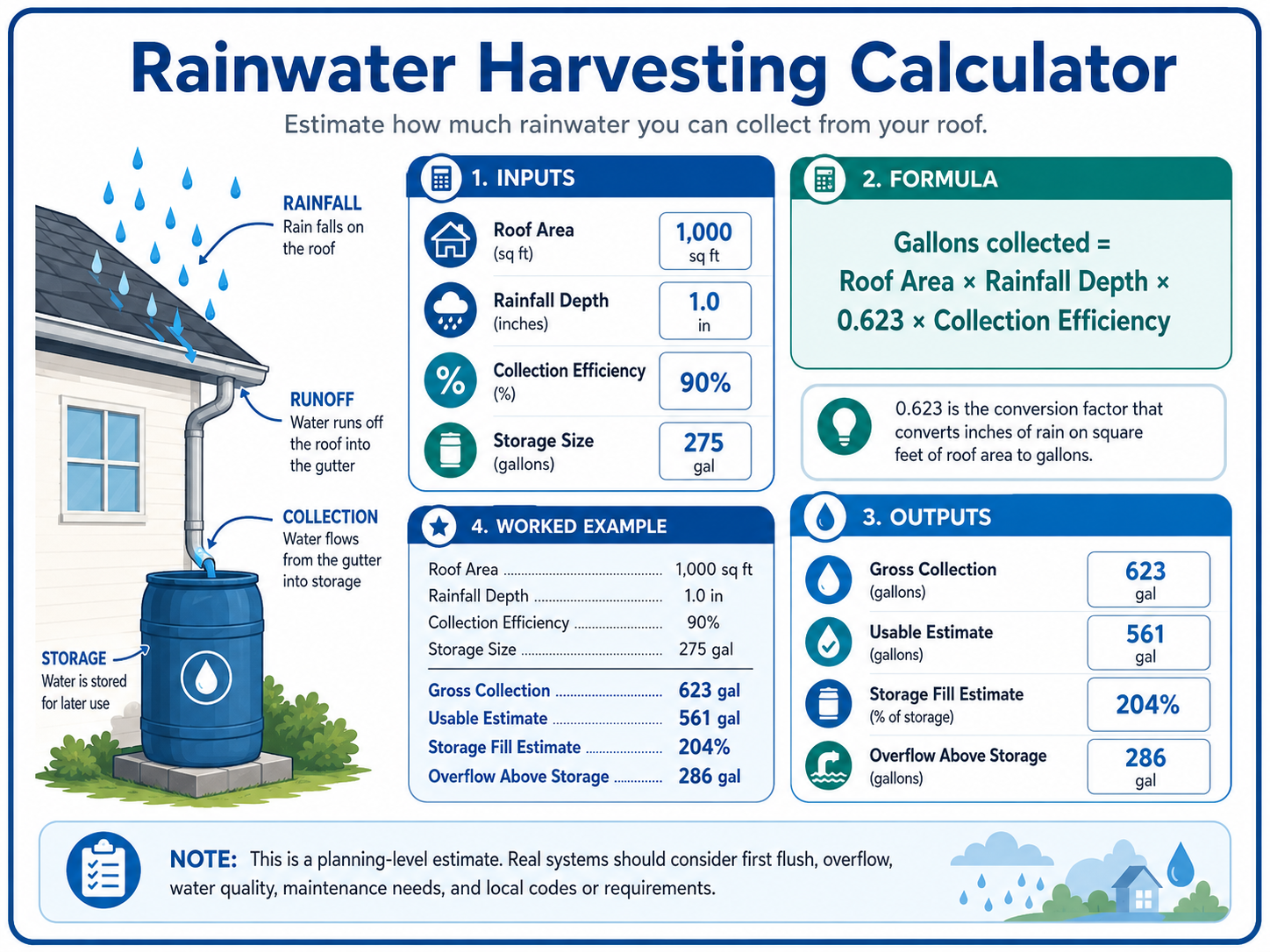
Estimate collected runoff volume from a roof and compare it to available storage.
Formula
Gallons = roof area in square feet x rainfall in inches x 0.623 x collection efficiency.
Account for first flush, screen losses, overflow, water quality, and local requirements.
What this calculator does
This tool estimates the runoff volume produced from a roof using roof area, rainfall depth, and collection efficiency. It also compares the usable volume to the storage size so the user can see whether a barrel or tank will overflow.
Inputs explained
- Roof area: The contributing roof area in square feet.
- Rainfall depth: The storm depth or design rainfall amount in inches.
- Collection efficiency: A loss factor for gutter losses, screens, first flush, and other reductions.
- Storage size: The usable storage volume in gallons.
Example use
A 1,000 square foot roof receiving 1 inch of rainfall produces about 623 gallons before losses. With 90 percent collection efficiency, the usable estimate is about 561 gallons.
Limitations
This is a planning tool. Actual systems should consider first flush, roof material, water quality, overflow routing, mosquito control, pumps, winterization, and local requirements.
FAQ
What does 0.623 mean?
It converts 1 inch of rain falling on 1 square foot of roof area into gallons.
Can this calculator size a potable rainwater system?
No. Potable use requires treatment, disinfection, backflow protection, and code review.
Why is collection efficiency less than 100 percent?
Some water is lost through splash, first flush, screen debris, gutter leakage, overflow, and wetting losses.
What happens if the storage fill is over 100 percent?
The storage container is smaller than the estimated usable runoff volume, so overflow should be planned.
Related tools
Need help reviewing this result?
Use this calculator for planning-level checks, then request help if you need a second look at assumptions, units, stormwater criteria, pump sizing, storage volume, or report-ready calculations.